A shared umbrella can turn two simple silhouettes into an entire story.
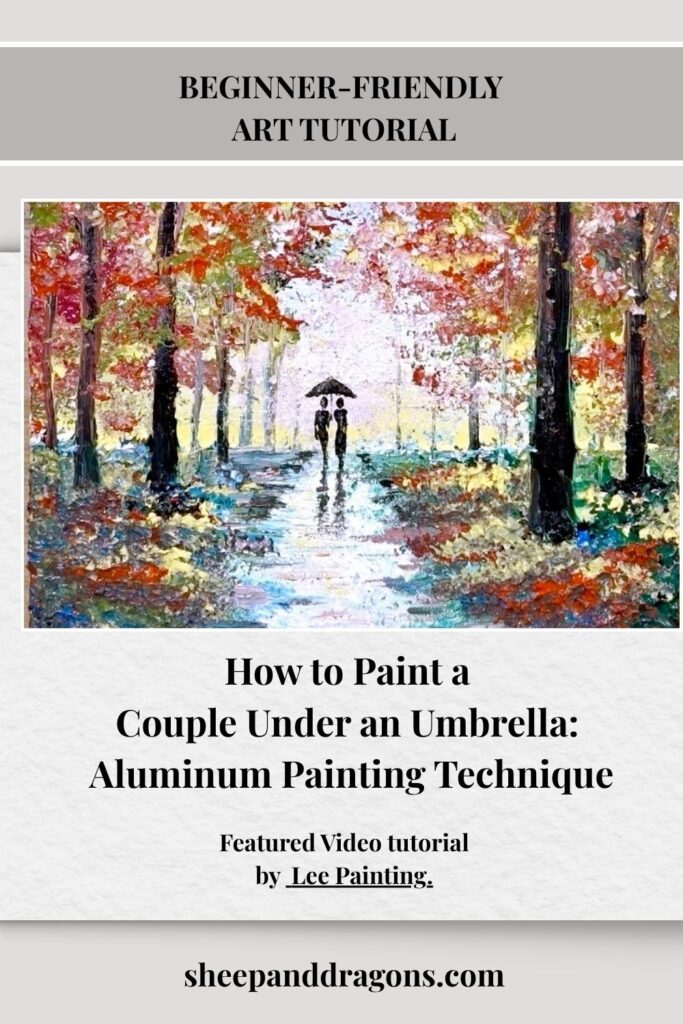
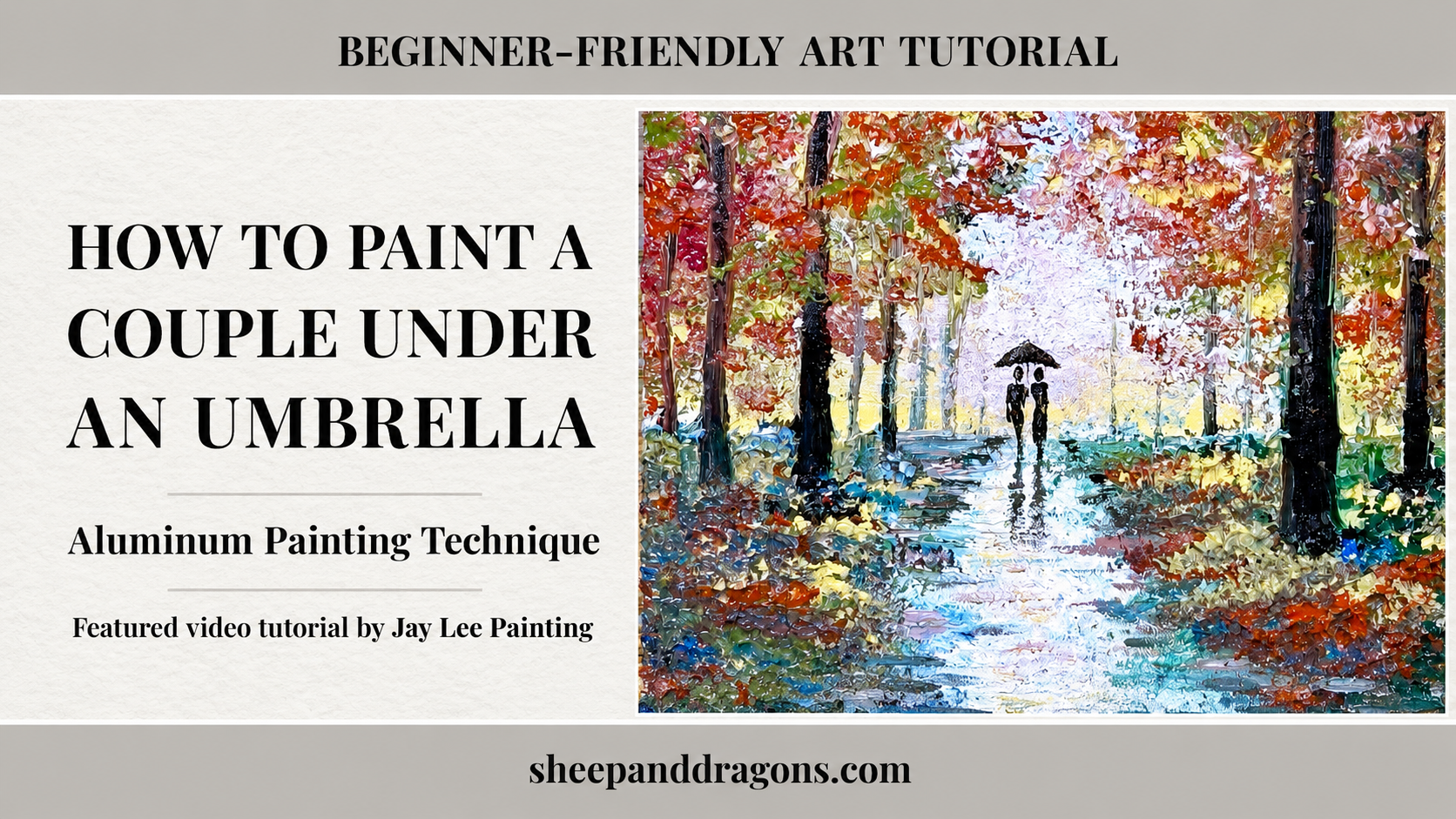
In this featured acrylic tutorial, Jay Lee Painting creates an atmospheric scene of a couple walking together in the rain. Instead of relying only on traditional brushes, Jay uses aluminum to build expressive texture and movement around the figures.
The finished painting feels romantic without needing detailed faces or complicated anatomy. The weather, body language, and shape of the umbrella do most of the storytelling.
In this article, we will look at why the composition works, how aluminum can create unpredictable acrylic texture, and how you can use the demonstrated ideas to develop an original rainy-day painting of your own.
Most importantly, this tutorial is an invitation to discover the artist behind it. If the technique inspires you, please watch the original video on Jay Lee’s channel, explore his other painting demonstrations, and support his work directly.
Featured Artist: Jay Lee Painting
Jay Lee Painting is a painting-focused YouTube channel built around visually engaging demonstrations. Jay works on canvas with different media and frequently experiments with familiar objects as painting tools.
The channel is a particularly enjoyable resource for people who learn by watching. Rather than burying the creative process beneath a long lecture, the videos let viewers see how layers, textures, silhouettes, and final details transform a blank surface into a finished scene.
Across the channel, you can find:
- Acrylic landscape demonstrations
- Texture techniques
- Paintings made with unusual everyday tools
- Atmospheric woodland and rainy-day scenes
- Simple figures used to create narrative
- Approachable creative ideas for developing artists
Jay Lee does not merely show a finished result. The real value is seeing the order in which the painting develops and understanding which tools create particular effects.
If you enjoy this tutorial, take a moment to:
- Watch the original video on YouTube.
- Visit Jay Lee Painting’s channel.
- Explore more of the channel’s acrylic and experimental painting tutorials.
- Like the original video or subscribe if you want to support future work.
Those small actions help the artist whose educational content made this creative exploration possible.
Watch: Aluminum Painting Technique / How to Draw a Couple Under an Umbrella
In the featured video, Jay Lee demonstrates how to build an acrylic scene around the silhouettes of two people sharing an umbrella.
Watch Aluminum Painting Technique / How to Draw a Couple Under Umbrella on YouTube
The video, demonstrated composition, and original painting belong to Jay Lee Painting. This Sheep & Dragons article is an independent introduction, appreciation, and creative companion to the tutorial.
Why This Is a Wonderful Beginner Project
A scene containing two people may sound intimidating, but the figures do not require portrait-level detail.
This project is approachable because it relies on:
- Clear silhouettes
- Recognizable body language
- One strong umbrella shape
- Broad atmospheric texture
- A limited focal area
- Layering rather than precise realism
The viewer immediately understands the relationship between the figures because they stand close together beneath one umbrella. Their closeness communicates more than facial detail could at this scale.
The surrounding marks can remain expressive. Rain, mist, foliage, reflections, or abstract texture do not need perfect edges.
Suggested Materials
Watch Jay Lee’s complete video before beginning so you can see the demonstrated tools and sequence.
For your own experiment, you may use:
- Canvas, canvas board, or heavy acrylic paper
- Acrylic paints
- A palette or mixing surface
- Large, medium, and fine brushes
- A small piece of aluminum foil
- Water
- Cloth or paper towel
- Pencil or chalk for optional placement marks
You do not need to purchase a large collection of colors. A dark neutral, white, and two or three colors suited to your chosen mood can create a complete atmospheric painting.
What Aluminum Adds to Acrylic Paint
Aluminum foil can be folded, crumpled, flattened, or shaped into an irregular printing surface.
When it touches wet acrylic paint, it produces broken marks that would be difficult to repeat with an ordinary brush. These can suggest:
- Falling rain
- Light reflected on wet ground
- Distant foliage
- Clouds and mist
- Rough walls
- Leaves
- Abstract color movement
Because the surface is uneven, every impression changes slightly. That unpredictability keeps the background from looking mechanically repeated.
The technique works best when combined with brushes. The foil establishes energy and texture; the brush defines the silhouettes and selected details.
Step 1: Decide on the Mood
Before choosing individual colors, decide how the scene should feel.
A rainy couple painting might be:
- Romantic and warm
- Quiet and reflective
- Moody and cinematic
- Bright and hopeful
- Lonely and mysterious
- Soft and nostalgic
The mood will guide your background, contrast, and accent color.
For example, blue, grey, and white can create a cool rainy atmosphere. A red or yellow umbrella can then become a warm focal point. A nearly monochrome palette can make the scene more subtle and reflective.
Step 2: Plan the Main Shapes
The umbrella and couple should read clearly before small details are added.
Consider:
- Where will the couple stand?
- How much space will remain above the umbrella?
- Will they face the viewer or walk away?
- Where is the brightest area?
- Is the ground visible?
- Will the scene feel deep and realistic or flat and abstract?
You can make very light placement marks if needed, but avoid outlining every detail. The textured background may change the balance of the composition as it develops.
Step 3: Build the Background
Begin with large areas of color and value.
Think of the background as atmosphere rather than a collection of separate objects. You can suggest a rainy street, park, woodland path, or abstract space without describing every building, tree, or cloud.
A useful value structure might contain:
- A lighter area behind or around the umbrella
- Darker framing shapes near the edges
- Medium-value texture through the central space
- Ground marks that support the figures
Placing lighter color behind the couple can make the dark silhouettes easier to read.
Step 4: Create Texture with Aluminum
Prepare a piece of aluminum foil by folding or loosely crumpling it. Leave part of it easy to hold and create an irregular surface for applying paint.
Test the tool on scrap material first.
Experiment with:
- Pressing and lifting
- Turning the foil between impressions
- Dragging one edge lightly
- Using a corner for smaller marks
- Applying more or less pressure
- Overlapping two colors
Begin with controlled amounts of paint. If the foil is overloaded, it may produce a solid patch rather than interesting broken texture.
Layer the marks gradually. Preserve some of the background instead of covering every inch.
Step 5: Suggest Rain and Wet Surfaces
Rain can be represented in several ways:
- Fine vertical or slightly angled lines
- Broken light marks
- Blurred background edges
- Reflections beneath the figures
- Small highlights on the umbrella
- A cool, limited color palette
You do not need to use every effect. One or two clear signals are enough for the viewer to understand the weather.
If you include reflections, pull simplified versions of the figure and umbrella colors downward into the ground. Keep them softer and less defined than the actual subjects.
Step 6: Paint the Umbrella
The umbrella is the clearest shape in the scene and often the strongest focal point.
Begin with its overall silhouette:
- A broad curved top
- Clean outer edges
- A central point or gentle peak
- A handle or shaft connecting it to one figure
If the umbrella is a bright accent color, keep the rest of the palette quieter so it can lead the eye.
You can add a few light or dark variations to suggest wet fabric and curvature, but do not lose the simple recognizable shape beneath unnecessary detail.
Step 7: Add the Couple
Paint the two figures as connected but readable silhouettes.
Look for the gesture before the anatomy:
- Are their shoulders touching?
- Does one figure lean toward the other?
- Are their legs positioned to suggest walking?
- Which person holds the umbrella?
- Do their coats or clothing create distinct outer shapes?
Keep the heads small, the bodies simple, and the legs clearly separated enough to communicate movement.
The figures should feel like they belong beneath the umbrella. Check that the umbrella is wide enough to cover both of them and that the handle connects logically to a hand or arm.
Step 8: Strengthen the Story with Body Language
Two separate vertical shapes do not automatically feel like a couple.
Small adjustments can create connection:
- Bring the shoulders closer
- Angle the bodies toward one another
- Let one arm overlap the other figure
- Give the walking legs a shared direction
- Tilt the umbrella slightly as if one person is protecting the other
The pose should remain readable from across the room.
Step back regularly. If you cannot immediately understand the figures, simplify the silhouette instead of adding facial features.
Step 9: Add Final Highlights and Shadows
Use the final marks to clarify the focal point.
You might add:
- A thin highlight along the umbrella
- Small rain marks crossing the lightest area
- Ground shadows beneath the couple
- A few reflected colors
- Dark accents that separate their legs or coats
- One or two sharp marks among softer surrounding texture
Avoid sharpening every part of the painting. The strongest contrast should remain near the couple and umbrella.
Knowing where not to add another dramatic mark is half the battle. Acrylic paint has never once whispered, “Darling, perhaps that is enough,” so unfortunately we must do the stopping ourselves.
Common Beginner Problems
The aluminum creates heavy blobs
Use less paint and test the tool before applying it to the painting.
Every texture mark looks identical
Rotate, reshape, or use a different edge of the foil between impressions.
The figures disappear
Increase the contrast between the silhouettes and the area behind them.
The umbrella feels too small
Check the width early. It must visually cover both figures.
The scene becomes too busy
Leave quieter areas around the focal point and reduce competing highlights.
The couple looks stiff
Angle the shoulders, shift the legs, and let the figures lean slightly toward each other.
The colors become muddy
Allow selected layers to dry before adding new texture, particularly when working with complementary colors.
Creative Variations
Use Jay Lee’s technique as a starting point, then change the mood and story.
Red umbrella in a blue city
Create a cool blue-grey environment with one bold red focal point.
Golden autumn rain
Use ochre, rust, warm brown, and muted green, with pale rain marks crossing the scene.
Black-and-white romance
Work almost entirely in black, white, and grey. Use contrast and reflection rather than color to create drama.
Spring shower
Choose fresh green, soft blue, cream, and a small pink or yellow accent.
Moonlit walk
Paint with navy, violet, charcoal, and silver-blue highlights. Keep the couple close to a pool of reflected moonlight.
Personal memory
Change the clothing, setting, or umbrella color to evoke a real relationship or meaningful shared moment.
What You Can Learn from Jay Lee’s Approach
The value of this tutorial extends beyond one finished painting.
It demonstrates that:
- A recognizable story can be created with simple silhouettes
- Texture can imply weather and environment
- Everyday materials can become expressive art tools
- Contrast directs attention
- Body language can replace facial detail
- One strong shape can organize a composition
- Layering creates atmosphere
- A limited scene can still contain emotion
These ideas can be applied to landscapes, city scenes, abstract paintings, and many other narrative compositions.
Explore More from Jay Lee Painting
If the aluminum technique or quiet storytelling appeals to you, do not stop with this single tutorial.
Visit Jay Lee Painting on YouTube and explore the channel’s extensive collection of acrylic demonstrations. You will find other experiments with texture, familiar objects, landscapes, and small figures in atmospheric environments.
You may also enjoy the earlier Sheep & Dragons feature:
Watching several videos from the same artist helps you understand their visual language and problem-solving process more deeply than copying one finished image.
If you learn something useful, support the original creator by watching on YouTube, liking the video, leaving a thoughtful comment, or subscribing to the channel.
Discover More Art Tutorials
Continue exploring art and creative techniques on Sheep & Dragons:
- How to Paint a Tree with Watercolor Pencils
- Painting textures with everyday objects
- Easy acrylic landscapes
- Silhouette painting
- Rainy-day and atmospheric art
- Creative exercises for beginners
This featured-tutorial series celebrates artists who share their knowledge while encouraging readers to develop original work from the techniques they learn.
Video and Artist Credit
The embedded video, “Aluminum Painting Technique / How to Draw a Couple Under Umbrella,” was created by Jay Lee Painting. All video footage, the demonstrated painting, and the original composition belong to the artist. The written commentary, learning notes, and creative variations in this article are original Sheep & Dragons content.
Please watch the original tutorial and visit Jay Lee Painting’s channel to support the creator.